Explain
Purpose, essential knowledge, vocabulary, model, and success criteria.

Cambodian foundation · international capability · global opportunity
The Saint George International Learning & Pathways Framework connects clear teaching, strong English, strong Khmer learning, practical application, feedback, and preparation for each student’s next step.
The Saint George Learning Cycle
This shared language helps teachers plan, explain, check, and improve learning while allowing lessons to respond to different subjects and learners.
Purpose, essential knowledge, vocabulary, model, and success criteria.
Examples, guided work, reading, discussion, retrieval, and careful repetition.
A problem, project, investigation, performance, text, or practical challenge.
Observation, conversation, work, demonstration, reflection, and assessment.
Feedback, correction, further practice, a new challenge, or additional support.
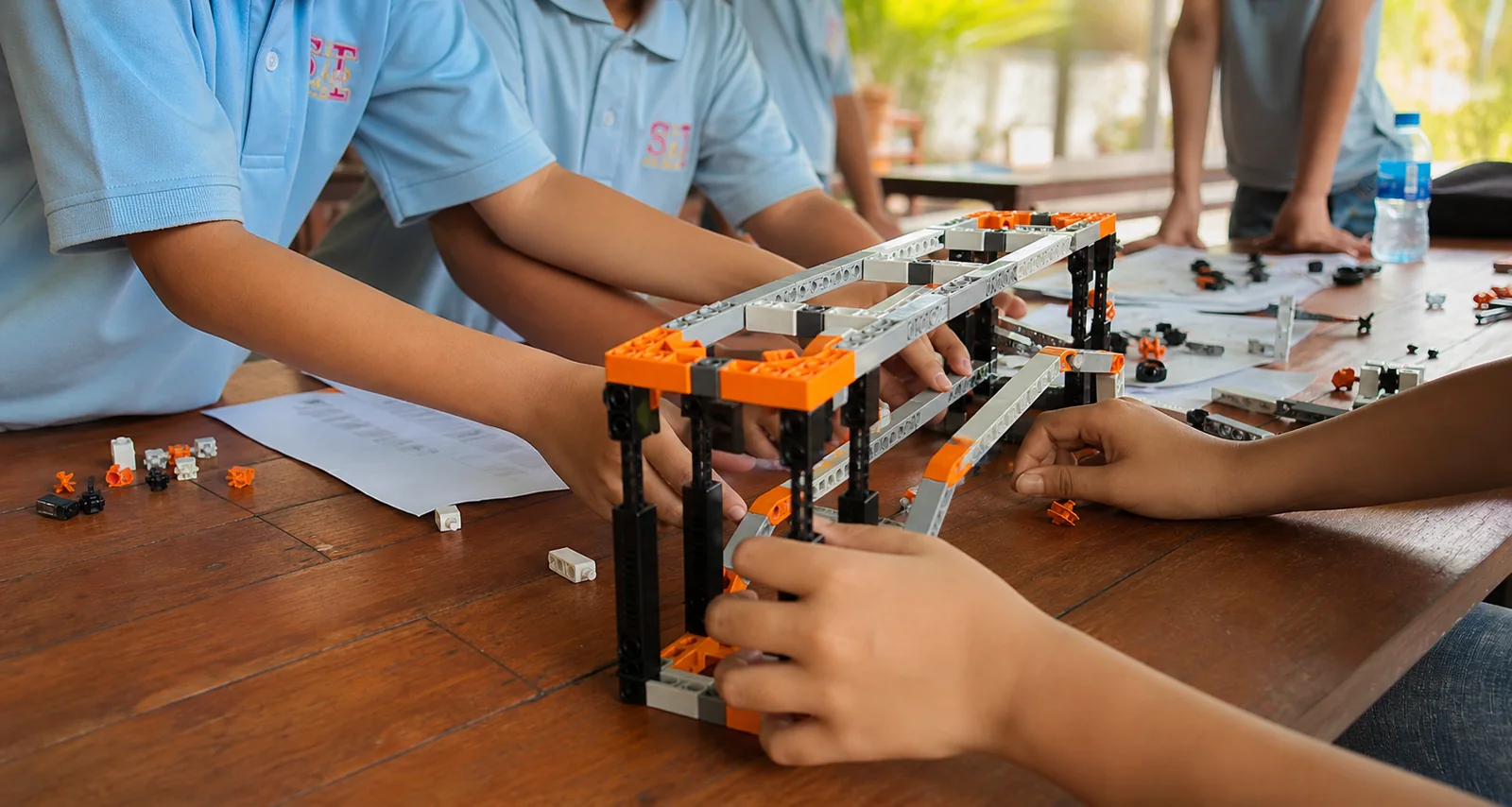
One example of visible learning
A well-designed engineering task can connect instructions, vocabulary, measurement, prediction, systems, safe tool use, fair testing, redesign, teamwork, and explanation.
Across the curriculum
International reference points, local context, and clear assessment work together to support progression.
Reading, writing, speaking, listening, vocabulary, precision, presentation, and responsible research.
Fluency, reasoning, problem-solving, patterns, data, measurement, and application.
Observation, evidence, systems, design, digital capability, safety, and responsible innovation.
Culture, history, geography, perspectives, ethical questions, and responsible citizenship.
Art, music, movement, performance, health, making, expression, and collaboration.
Organisation, independence, reflection, study planning, resilience, and asking for help.
Evidence and family communication
A score can be part of the picture. It is not the whole picture. Useful communication connects evidence to strengths, gaps, goals, support, and the next action.
Observation, conversation, written work, demonstrations, projects, tests, and student reflection can reveal different parts of learning.
Families should be able to understand what is secure, what remains difficult, and what the student is working towards.
Feedback should lead to practice, correction, challenge, support, or a changed plan—and then be checked again.
Future pathways · planned Grades 9–12 model
Saint George is developing a Future Pathways model that connects interests, subject foundations, English capability, study habits, applications, and transition planning. Final delivery details and any external recognition will be published only when confirmed.
See learning in context
A classroom visit can show how Saint George turns curriculum into explanation, practice, application, and improvement.