Ask and listen
Gather the learner’s, family’s, and teacher’s observations without reducing the child to a label.

Belonging with meaningful expectations
Different learners may need different routes into the same important knowledge, skills, relationships, and sense of achievement.
The support cycle
Support should be specific enough to act on and honest enough to review. A diagnosis is not required to begin a respectful educational conversation.
Gather the learner’s, family’s, and teacher’s observations without reducing the child to a label.
Look at instructions, language, sensory load, processing time, routines, relationships, prior knowledge, and task demands.
Choose a small number of practical strategies, clarify who will do what, and keep the learning goal meaningful.
Ask whether participation, understanding, work, confidence, or independence improved—and change the plan when it did not.
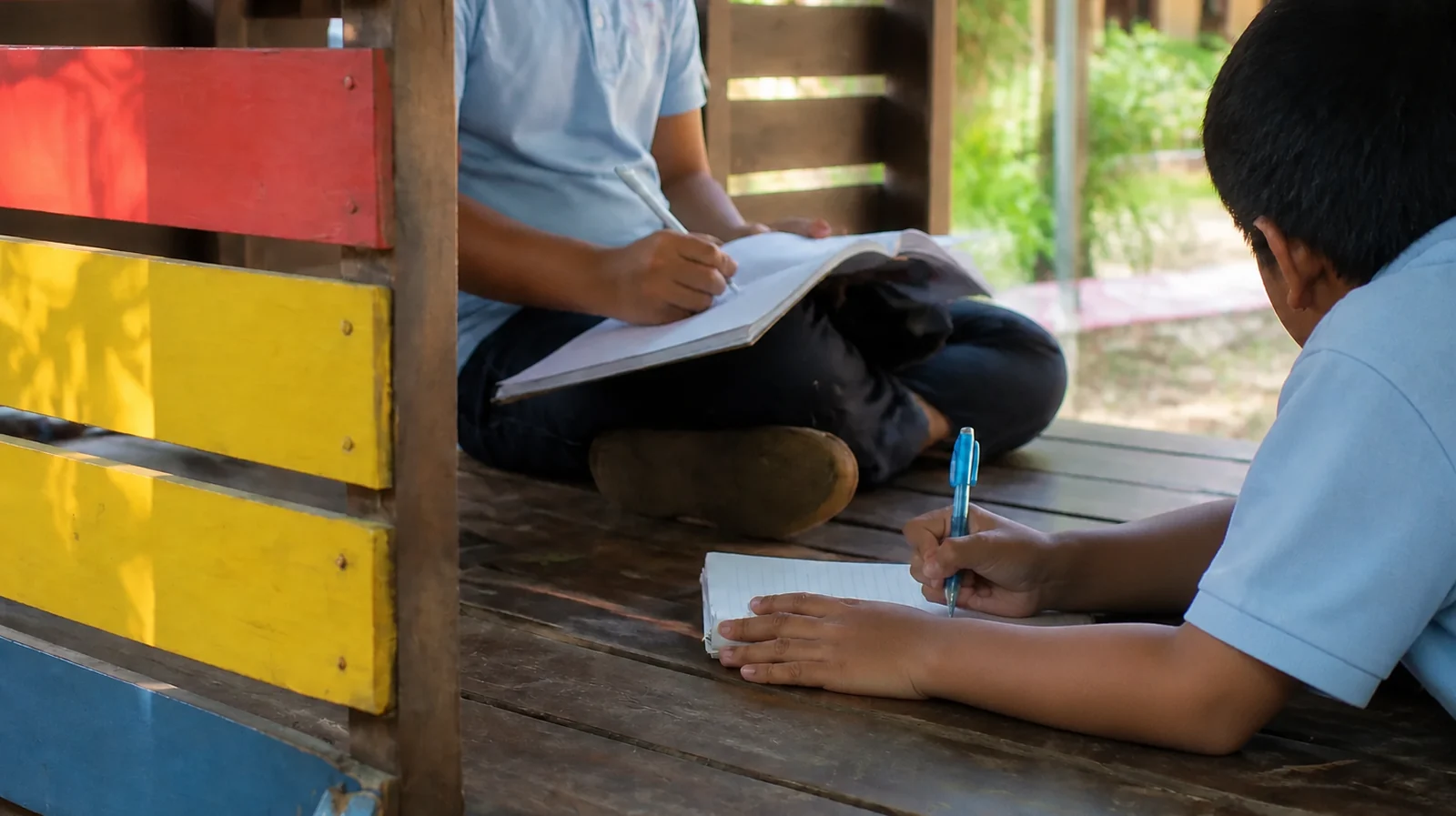
Practical teaching adjustments
Family knowledge matters
Families may recognise patterns, interests, communication preferences, and successful strategies that are not visible in one classroom. Teachers contribute curriculum, classroom, task, and peer context.
Understanding available support
A private conversation helps the school understand strengths, classroom needs, useful strategies, and the support currently available for the child’s age and stage.
Teachers can discuss practical adjustments, classroom routines, learning goals, and ways to review whether support is helping.
Where specialist advice may be useful, Saint George can discuss appropriate next steps with the family, subject to availability and educational purpose.
Families can discuss the learner’s needs, environment, timetable, current staffing, and available arrangements before deciding.
Begin with a conversation
Start with strengths, routines, challenges, successful strategies, and your family’s goals. Saint George will explain if further information would be useful.